- Mobile LCP, home page (WordPress: 5.2 s)
- 2.0–2.3 s
- Home page weight (WordPress: 2.2 MB)
- 387 KB
- Lighthouse performance, mobile (WordPress: 61)
- 98–99
The brief
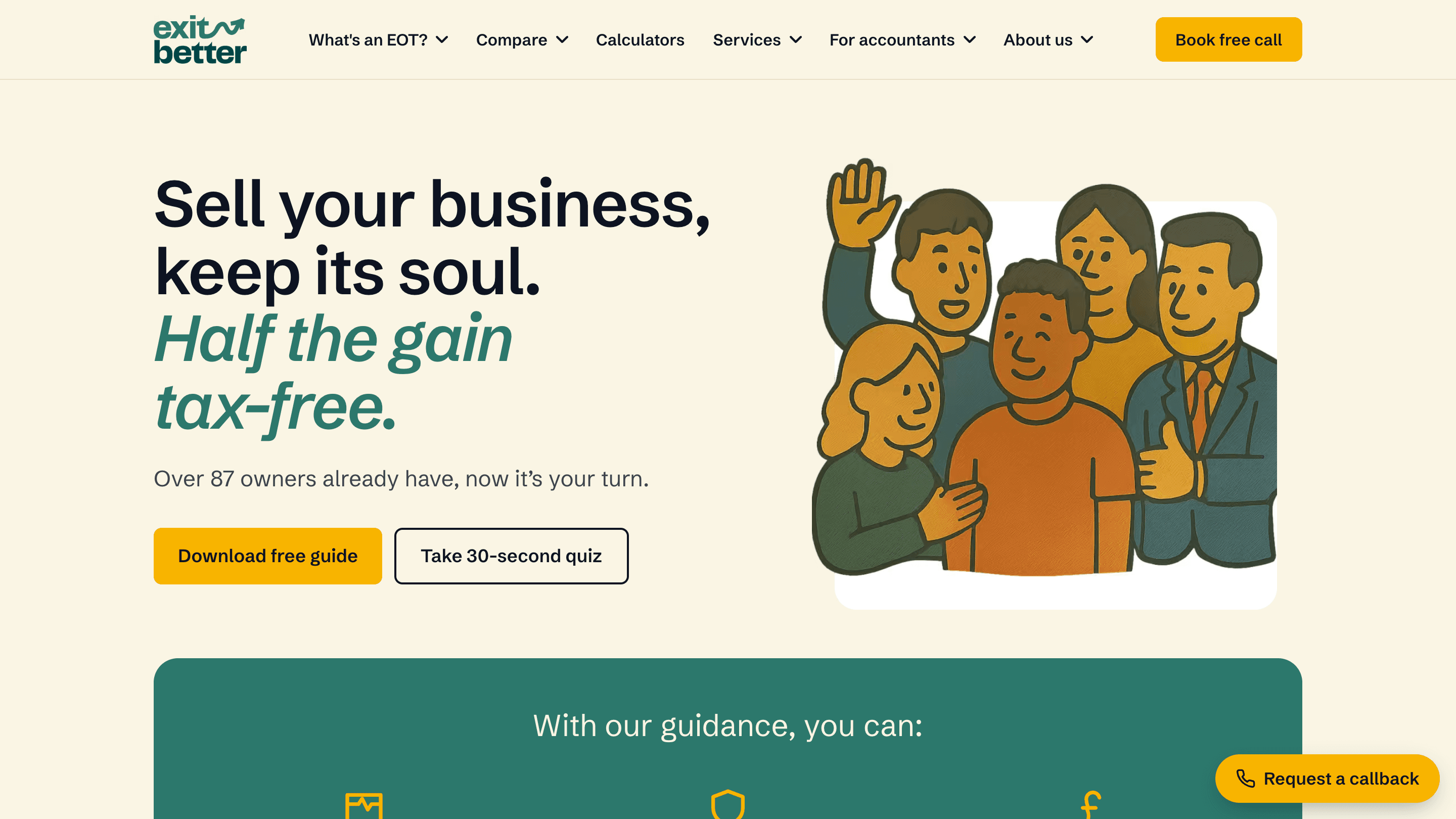
Exit Better is the employee-ownership advisory brand of JLA Accountants. It helps owners sell their company to an Employee Ownership Trust. The site was built on WordPress with Elementor, and it was slow: on a phone, the home page took 5.2 seconds to show its main content, weighed 2.2 MB and made 133 requests.
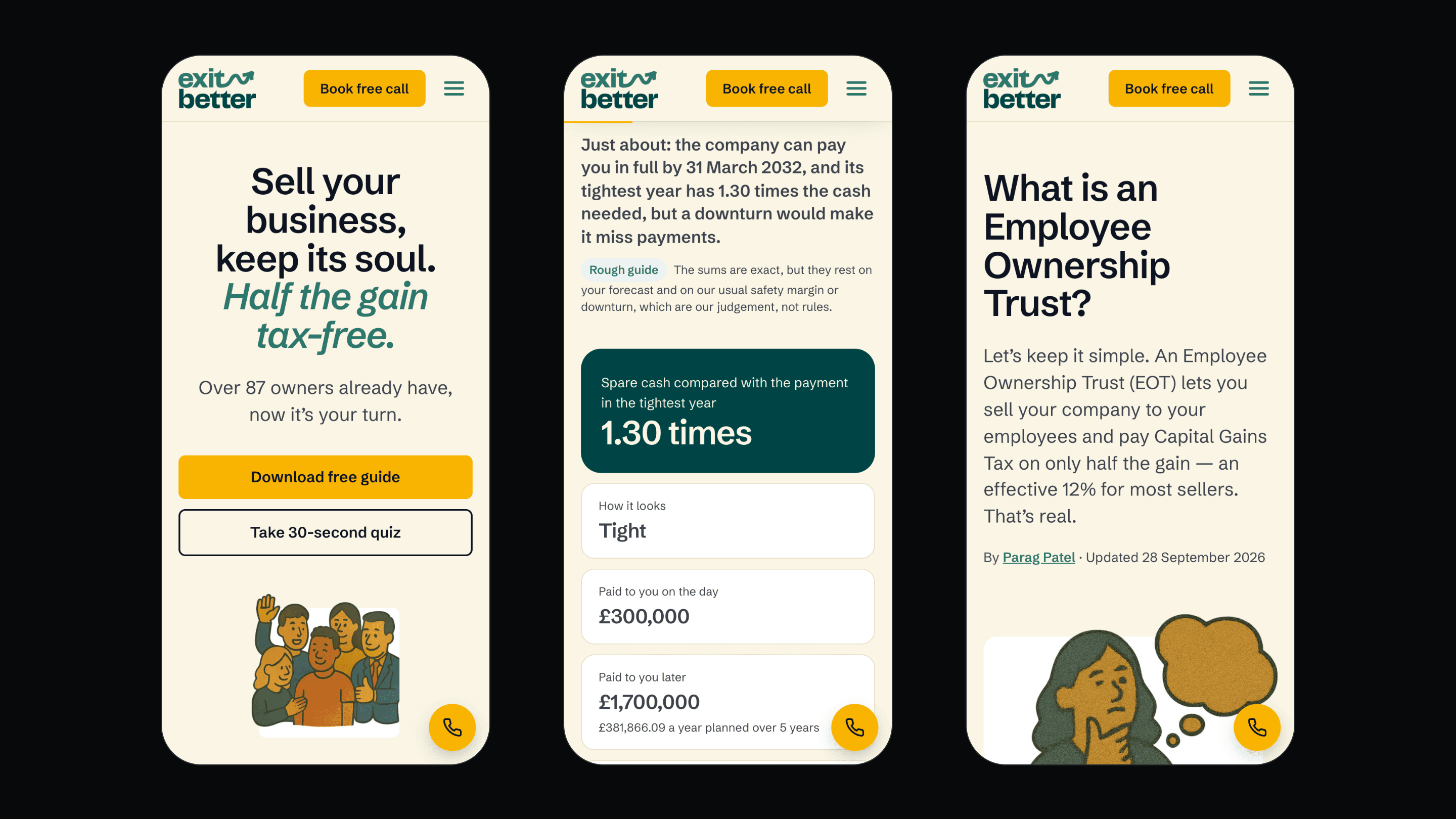
The design worked, so the brief was short: the same site, the same look, much faster. Not a redesign. We started on 17 September 2026 and the new site went live on 28 September.
Why it was slow
We measured before we changed anything. The old site rebuilt every page from scratch on every visit, so the server took between one and three seconds to answer before the browser could start. Then the page builder loaded its whole kit on every page, used or not: 53 stylesheets and 36 scripts. The main picture was found late, and the brand font came from a third-party service.
None of that was the design's fault, so none of the fixes touched the design.
Same look, rebuilt
The new site is Next.js and TypeScript, and every page is built ahead of time, so on our tests the server answered in about 30 milliseconds. Nothing at the top of a page waits for JavaScript to appear. The styles are inlined into the page, and the brand font is a close match we host ourselves, rather than a call to a font service.
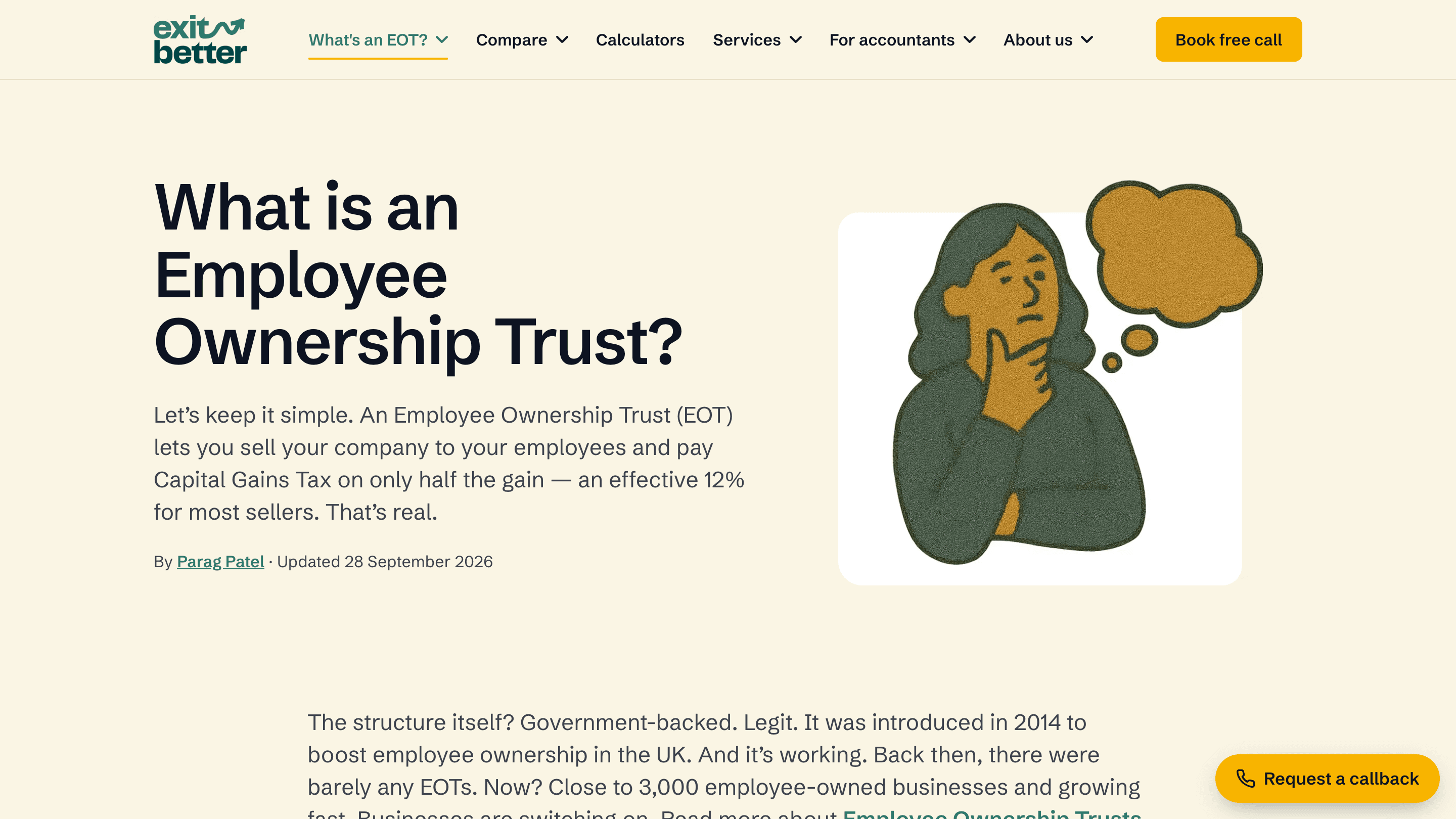
The content moved from WordPress into plain text files that sit with the code, and the page titles, descriptions and addresses that search engines already knew came across with it. The explainer and comparison pages carry a byline and the date the words last changed.
We kept the look, with a few deliberate changes for readability. The biggest was the main buttons: they had white text on amber, a contrast of 1.68 to 1 that's hard to read for many people. They now use dark text on the same amber, so the buttons look the same and can be read.
Moving it without losing anything
- Every old address was dealt with. We checked all 519 addresses the old site had. Each one is now served, sends a permanent (301) redirect to its new home, or was retired on purpose. Of 249 old FAQ pages, 97 now point to the answer on their topic page. The other 152 had nothing to do with employee ownership, so they were retired with a "gone" (410), on purpose.
- Analytics only with consent. Google Analytics loads only after a visitor clicks Accept, and Reject is just as easy. On our test runs, every request the home page made went to exitbetter.co.uk.
- Spam checks that keep real enquiries. Enquiries and guide requests are native forms with spam checks. An enquiry that looks like spam is still delivered, marked as likely spam, rather than thrown away on a guess.
- No downtime to deploy. A new version starts beside the old one and must pass a health check before it takes any traffic. Across two deploys we probed the site 129 times and none failed.
Nineteen free calculators
After launch we added a set of free calculators, for the questions owners ask before they sell: can you sell to your employees, can the company afford to pay you, what an offer paid over time is really worth, what happens to inheritance tax afterwards. All 19 went live on 20 October 2026, with no sign-up.
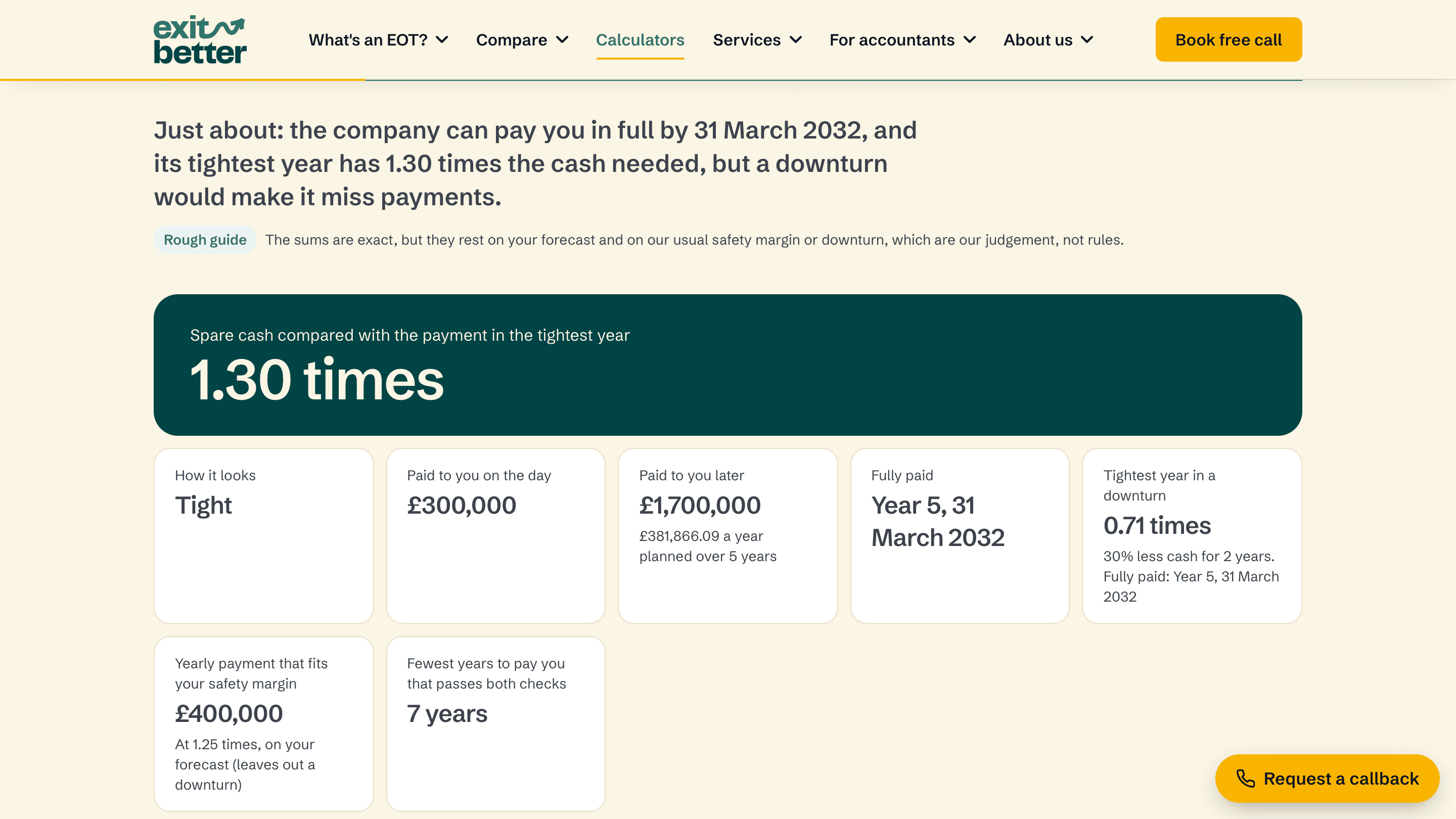
Each one was built from a reviewed specification, and we checked every rule against legislation.gov.uk, gov.uk or HMRC's manuals. Where the official source disagreed with the specification, the source won, and the difference went back to JLA in writing. The sums run in whole pence, and each calculator works its key figures a second way before it answers; a result that fails that check never reaches the visitor. Answers aren't stored or logged. Questions with a yes, no or not sure answer start on "Not sure", so an unconfirmed condition never gives a definite answer.
Each calculator's page also shows a worked example, run through the same code when the site is built, so the page is useful to read before you type anything.
The numbers
Lighthouse on mobile, three runs against the live home page on 29 October 2026, compared with one run against the WordPress site on 17 September:
- Largest contentful paint 2.0 to 2.3 s, against 5.2 s.
- 387 KB for the whole page, against 2.2 MB, in 28 requests, against 133.
- Performance 98 to 99, against 61. Accessibility 100, against 84. Best practices 100, against 79.
These are lab runs from our own machine, not field data from real visitors.
Why it's on this site
Most of what slows a business website down has nothing to do with how it looks. We measured what was slow, fixed the causes, moved the site without losing a link by accident, and kept the design the client already had. If your site or system is holding you back, tell us what you're working around.