Damage reporting for taxi fleets. A driver scans the sticker in the car, and the workshop has it with photos before they have pulled away.
It replaces the shared spreadsheet and the WhatsApp group of photographs. Built, owned and run by us, and in daily use at a taxi operator in the Netherlands.
- Live
- Since Sep 2026
- Any phone browser
- Dutch · English
Reporting has to be quicker than ignoring it.
Fleets don’t lose track of damage because nobody cares. They lose it because reporting properly took longer than not bothering.
Scan the sticker
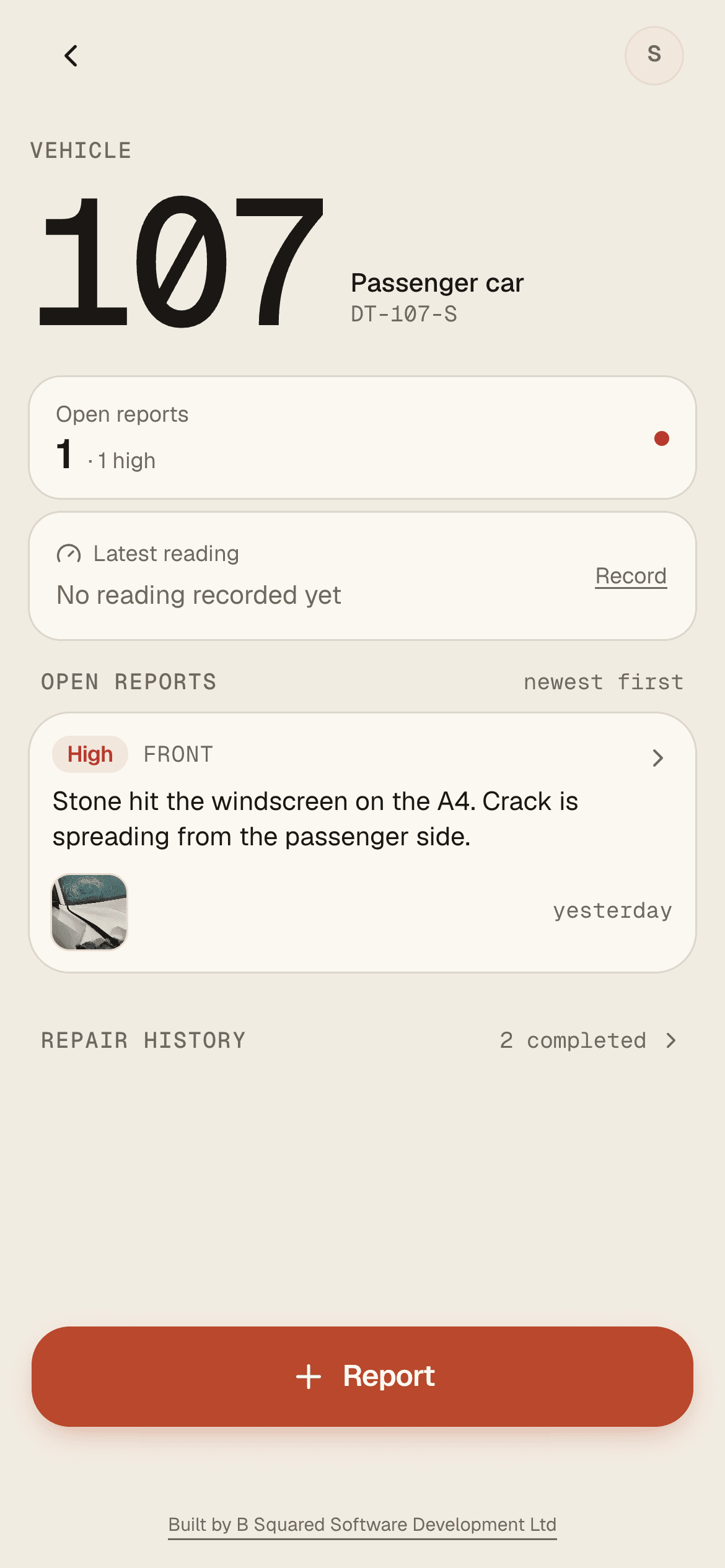
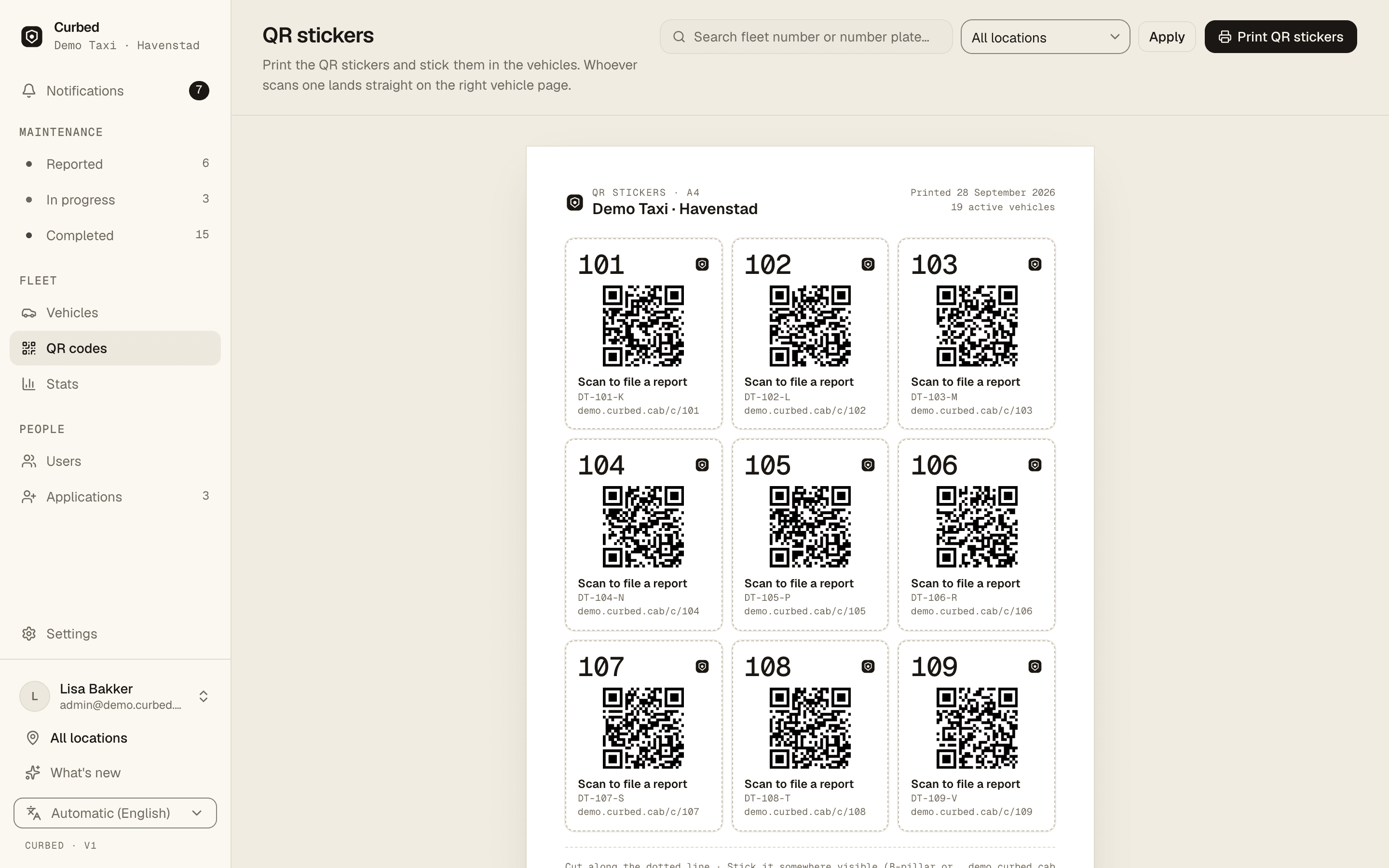
Every vehicle carries a QR sticker. Scanning it opens that exact vehicle, with what is already reported on it. Nothing to install, no fleet number to type.
Photograph and send
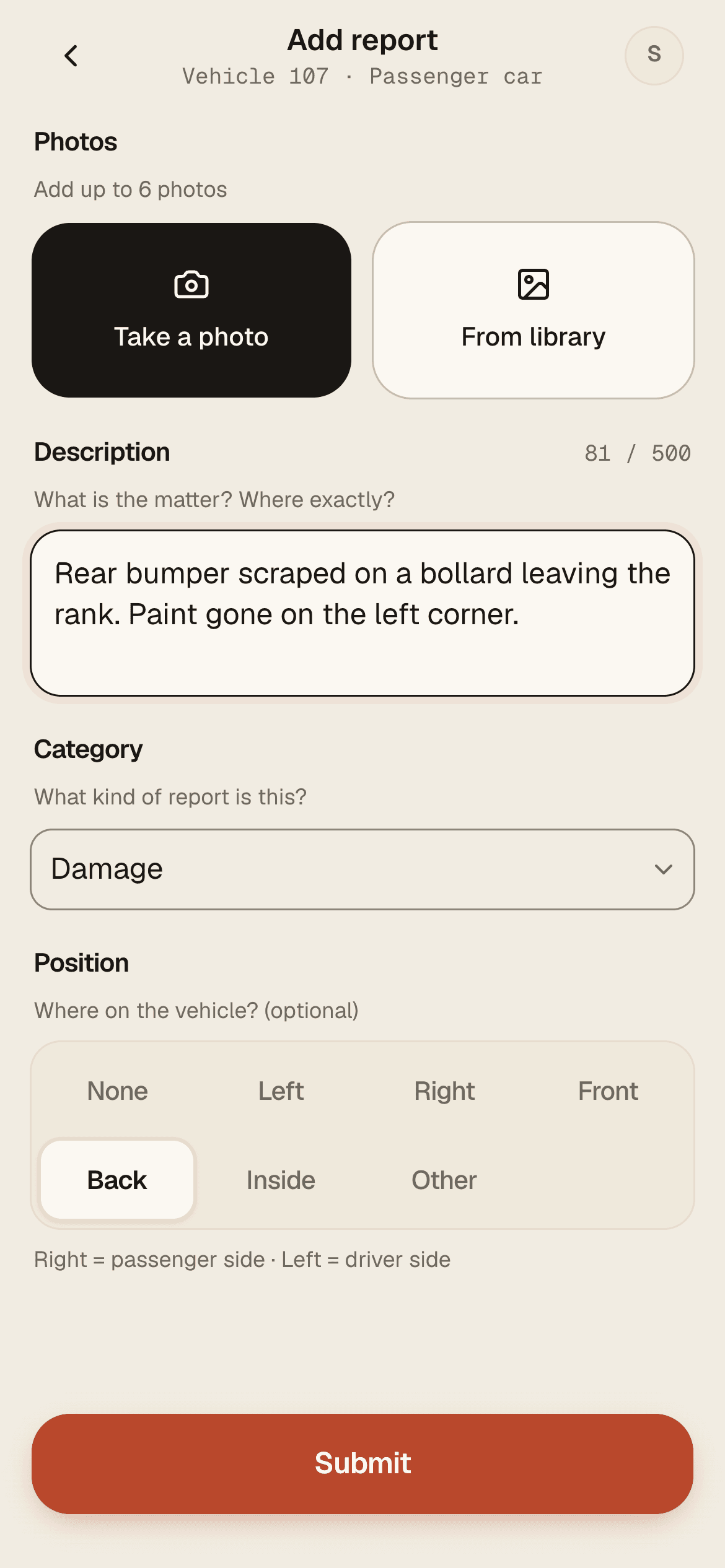
Up to six photos, a category, which side of the car. Ten seconds, from the car park, in the rain. That is the whole design brief.
The workshop takes it
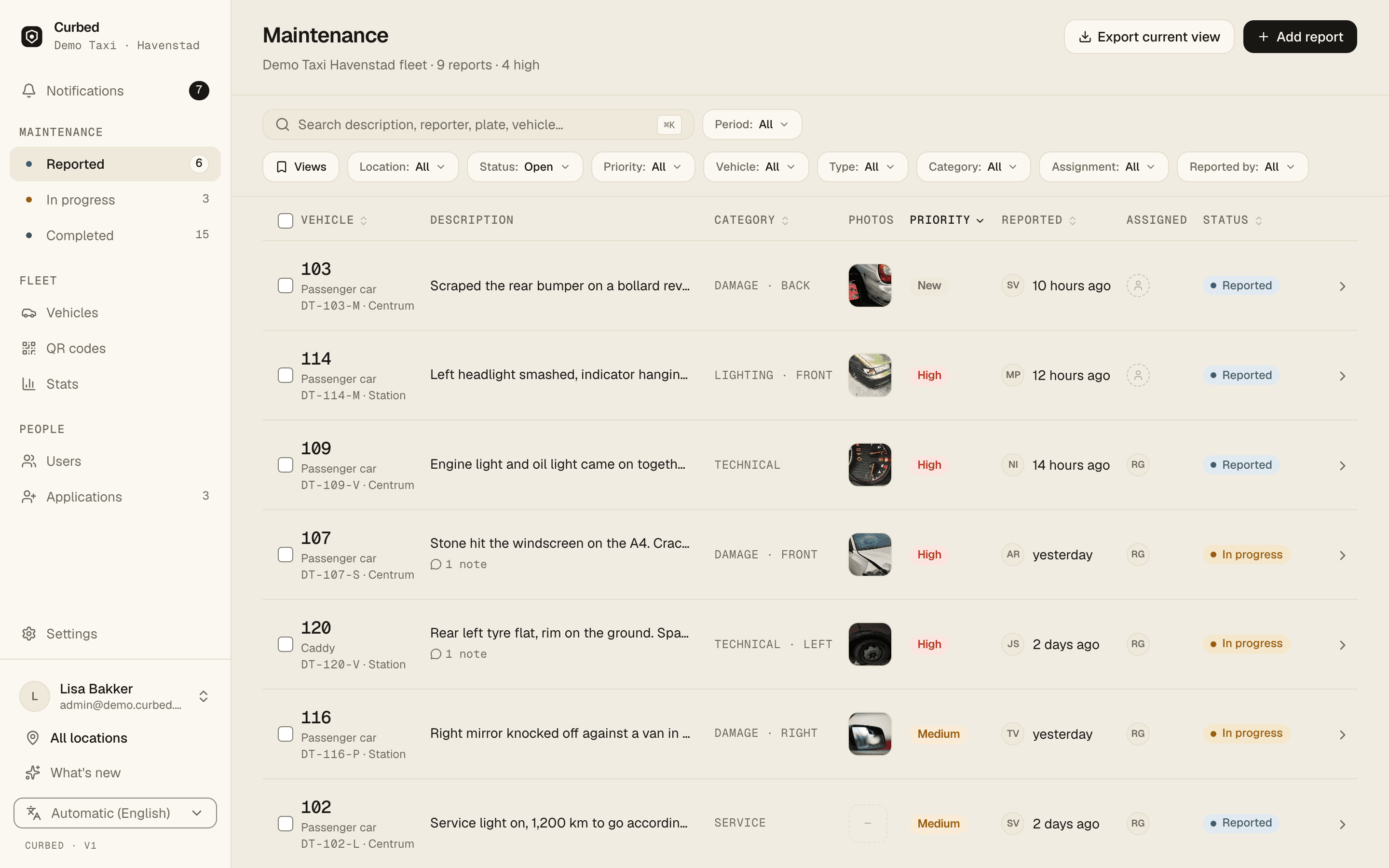
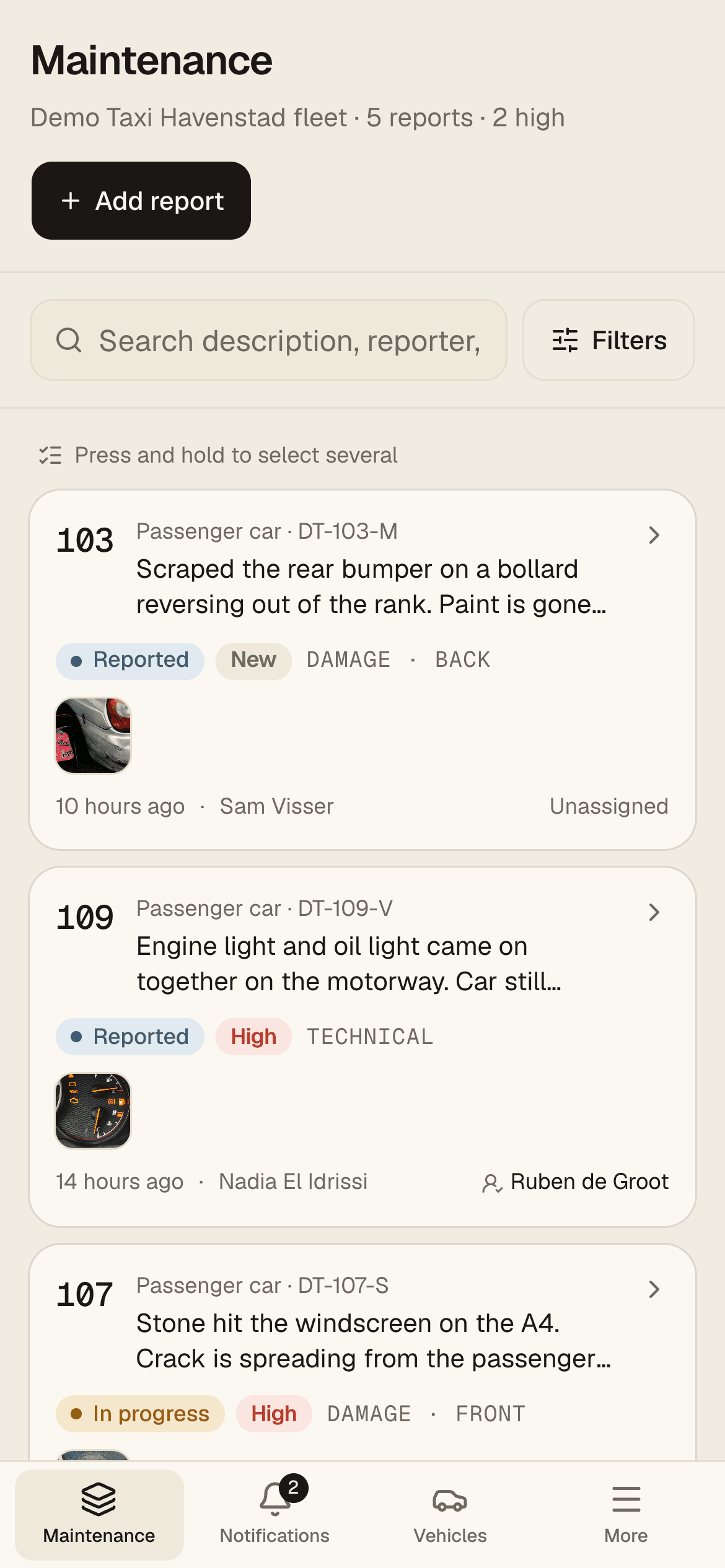
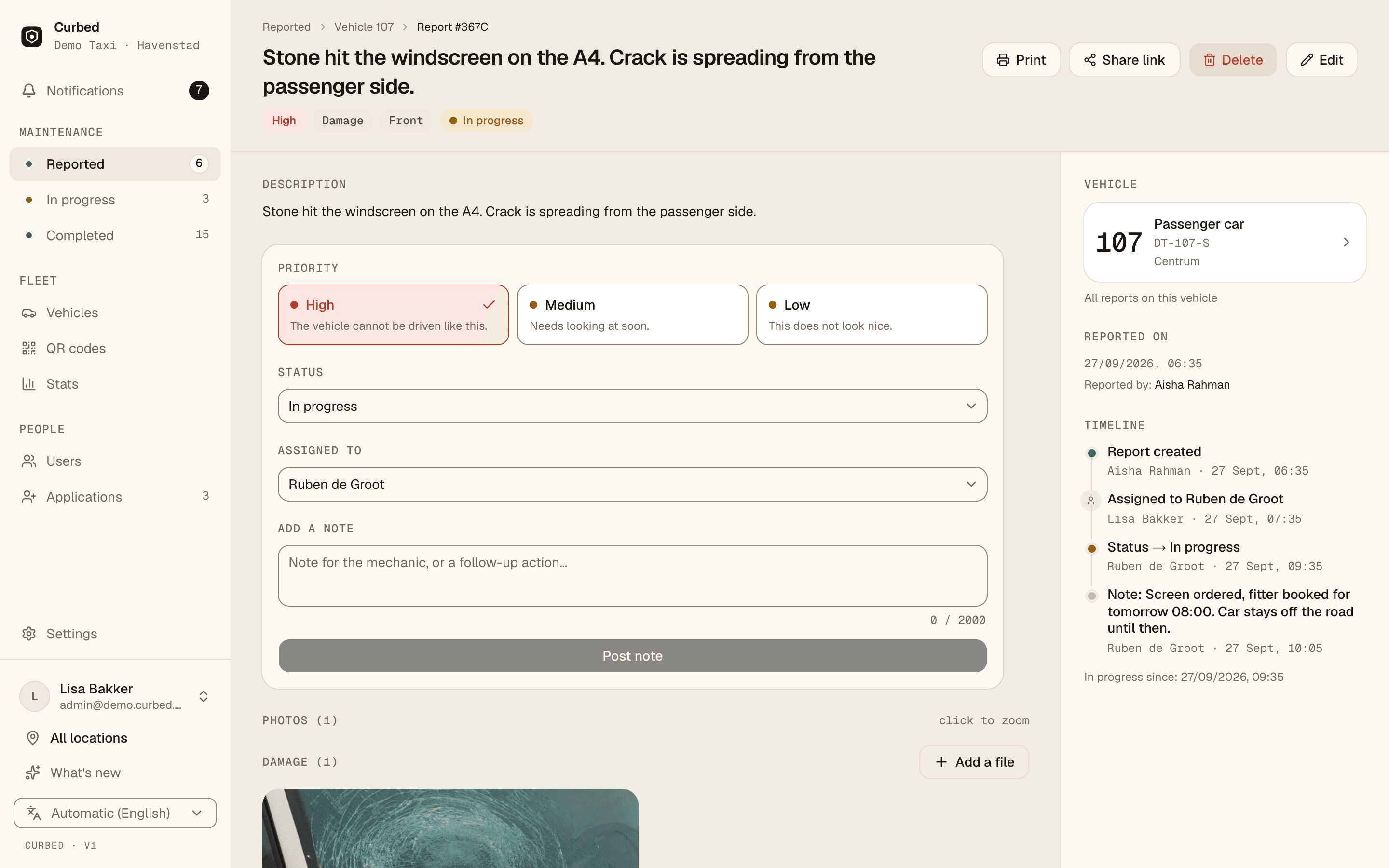
It lands on the mechanics' board straight away. Claim it, move it from reported to in progress to done, and the vehicle keeps the record.
Every report has an owner.
Priority, status, who it is assigned to and a dated timeline of everything that happened to it. When the fitter is booked, the note says so, and the owner doesn’t have to ring round to find out.
Stick it in the car. Done.
Stickers print from the app, an A4 sheet at a time, one per vehicle. Each opens its own vehicle’s page, so there is nothing to set up on a driver’s phone.
- Four roles
- Owner, admin, mechanic, driver. A mechanic sees a queue, an owner sees a business, a driver sees their vehicle.
- A lifecycle, not a note
- Reported, in progress, completed, with an assignee and a timeline at every step, plus bulk changes from the board.
- Per-vehicle history
- Every report, repair and odometer reading on the vehicle's own page. Its condition is a record, not somebody's memory.
- Handover
- Drivers check a vehicle out and back in, so damage can be tied to the shift it appeared in.
- Depots
- One board, scoped per location, for operators running more than one yard.
- Live, with push
- The board updates as reports come in, and the right people get a notification on their phone.
- Your data, both ways
- CSV import for vehicles and staff, filter-aware CSV export of anything on the board, and an API for integrations.
- Stats that answer a question
- Which vehicles, categories and depots are costing money, over 12, 26 or 52 weeks.
The brief
A taxi fleet loses money to damage it cannot account for. A car comes back with a scraped bumper and nobody can say when it happened or who was driving, so the operator pays for the repair and the same thing happens next month.
The fleet we built this for was tracking it the way most do: a shared spreadsheet, updated when someone remembered, with photographs scattered across a WhatsApp group. The design problem was never the dashboard. It was making the report take ten seconds, from a phone, in a car park, in the rain. That is why there is no app to install and no login for a driver to fight with at the roadside.
The build
942 commits between May and September 2026. Next.js 16 and TypeScript on PostgreSQL with Drizzle, MinIO for the photographs, a NestJS API for the native apps and integrations, all in Docker behind Caddy on a server we run.
It has been multi-tenant from the first commit: every table carries an organisation, every query is scoped to one, and each company gets its own address. A test drives two companies side by side and checks that one company's session gets nothing on the other's. Retrofitting that later is one of the more expensive mistakes available.
The interface is in Dutch and English, chosen per reader, and a missing translation is a compile error rather than a gap found in production. A native iPhone app is in development against the same API.
Where it is now
Curbed went live with a taxi operator in the Netherlands in September 2026, and a public demo company runs alongside it, reset every 12 hours. Unlike the client work elsewhere on this site, Curbed is ours: built, owned and run by BSquared.
Try it on your phone.
The demo is a made-up taxi firm with a few weeks of work behind it. Pick a role and look around, no sign-up. When you want it set up around your own vehicles and depots, book a demo and we’ll do it with you.
Something like this, for your business.
The same approach works anywhere a spreadsheet and a group chat are holding a process together. Tell us what you’re working around.
Start a conversation →